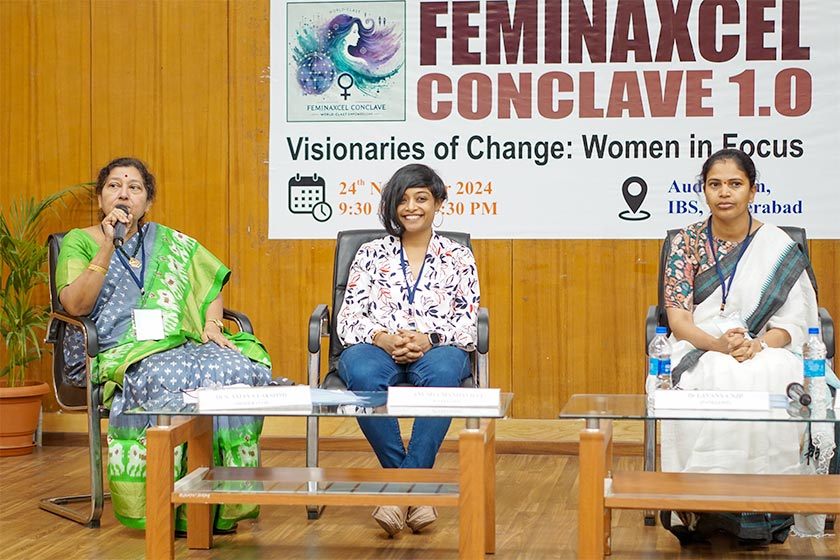
Introduction
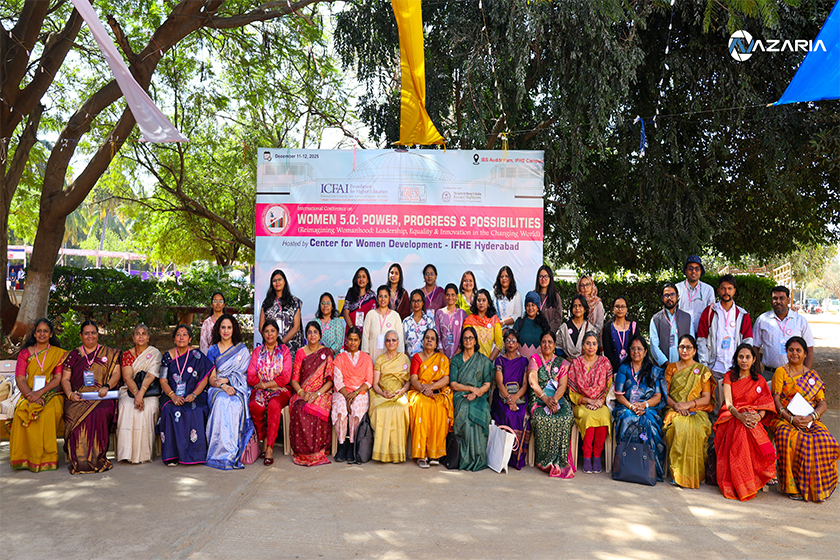
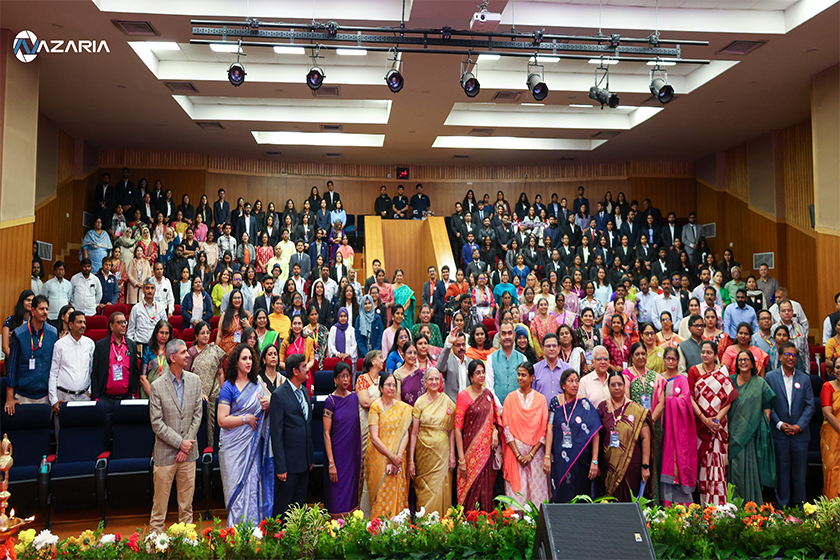
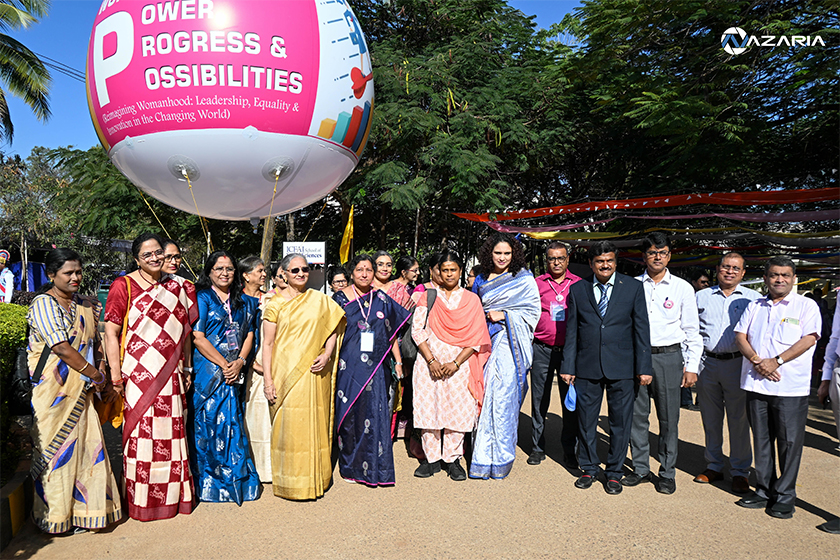
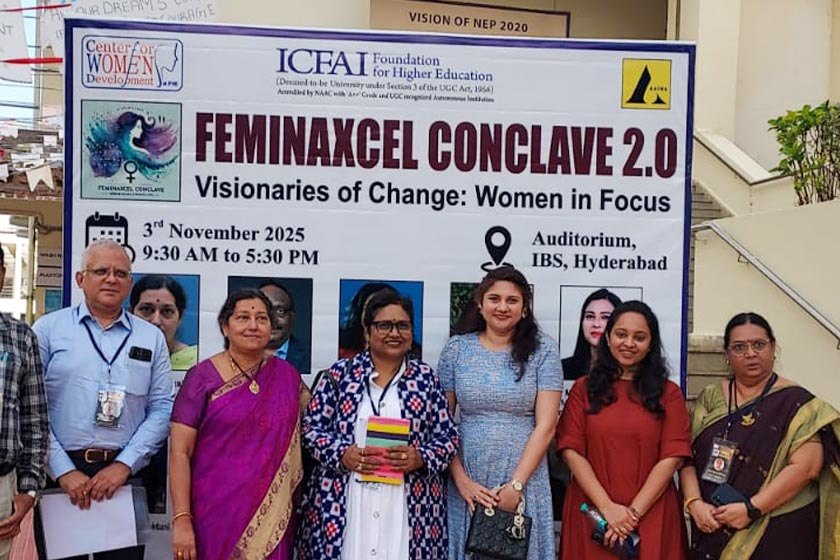
The Centre for Women Development
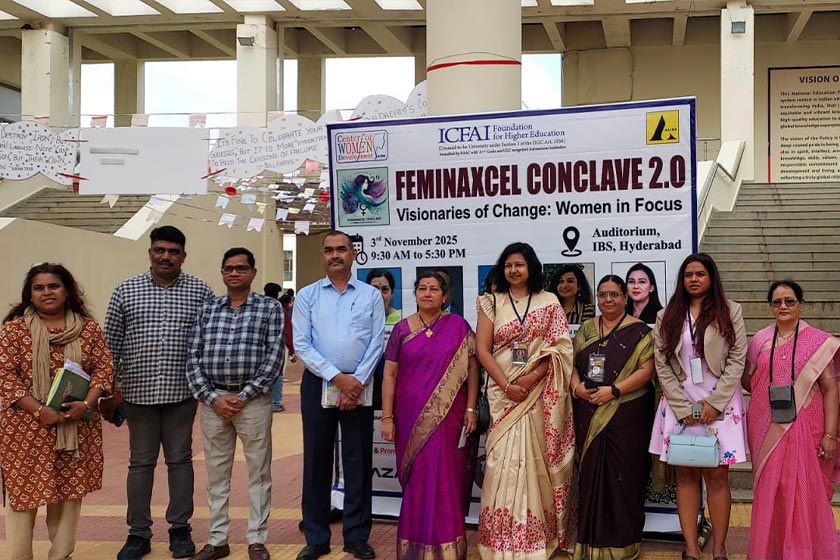
(CWD), IFHE, in association with Club Aaina,
IBS Hyderabad, successfully organized
Feminaxcel Conclave 2.0 on Monday, November
3, 2025, at the IBS Hyderabad campus.
Feminaxcel Conclave 2.0 was conceived as a platform to
bring together industry leaders, entrepreneurs, professionals,
academicians and students to engage in meaningful
conversations on women's empowerment, leadership, entrepreneurship,
innovation and inclusive growth.
In today's rapidly changing economic and technological environment,
women's participation in leadership, entrepreneurship and
decision-making has become increasingly important. While significant
progress has been made, women continue to encounter several challenges
in accessing leadership opportunities, entrepreneurial capital,
professional networks, mentorship and supportive ecosystems. The
conclave therefore sought to create an open and inspiring platform where
these issues could be discussed through the experiences of accomplished
women leaders and industry professionals.
The programme focused not merely on celebrating women's achievements but
also on understanding the ecosystems, institutional practices
and individual resilience required to enable women to succeed and
lead.
Objectives of the Conclave
The major objectives of Feminaxcel Conclave 2.0 were:
- To promote awareness about women's leadership and
empowerment across professional and entrepreneurial
domains.
- To provide students with direct exposure to successful women
leaders, entrepreneurs and industry professionals.
- To understand the role of multinational corporations in creating
inclusive and gender-sensitive workplaces.
- To explore how corporations and entrepreneurial ecosystems can
support women founders and innovators.
- To highlight the challenges faced by women entrepreneurs and discuss
strategies for overcoming them.
- To inspire students to consider entrepreneurship, leadership
and innovation as viable career pathways.
- To facilitate interaction between students and industry leaders and
provide opportunities for learning, mentoring and
networking.
- To encourage institutions and organizations to create ecosystems
that enable women to participate, lead and contribute
meaningfully.
- To reinforce the commitment of IFHE and its constituent schools
towards gender equality, inclusive growth and leadership
development.
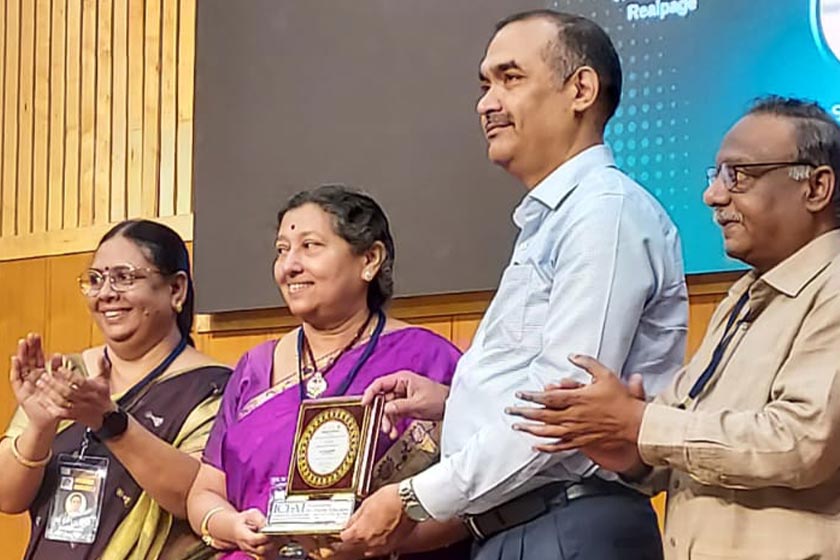
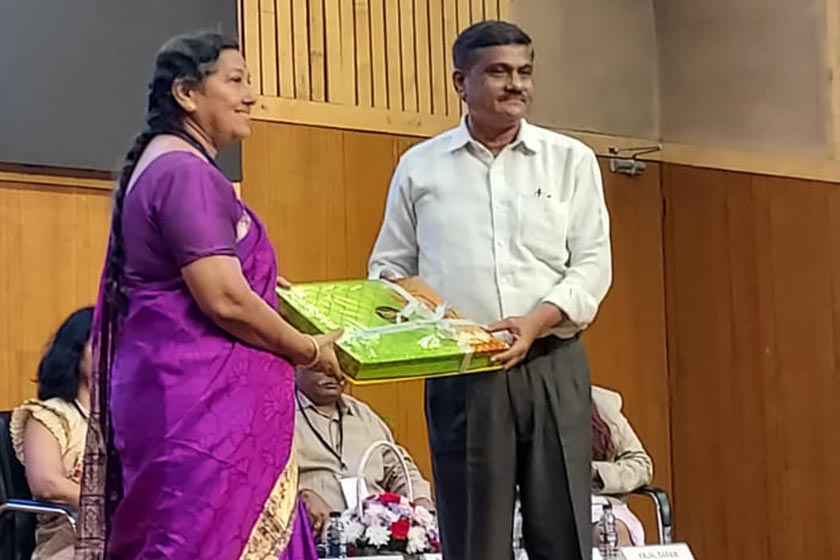
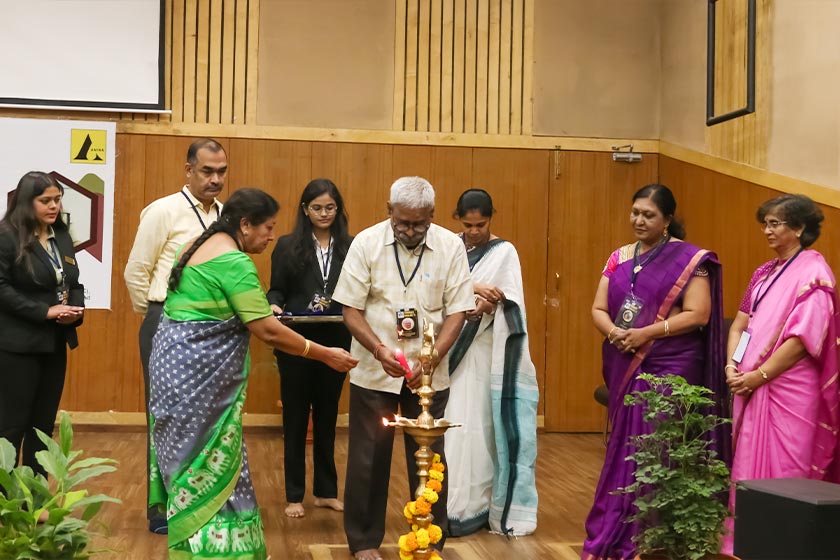
Inaugural and Dignitary Presence
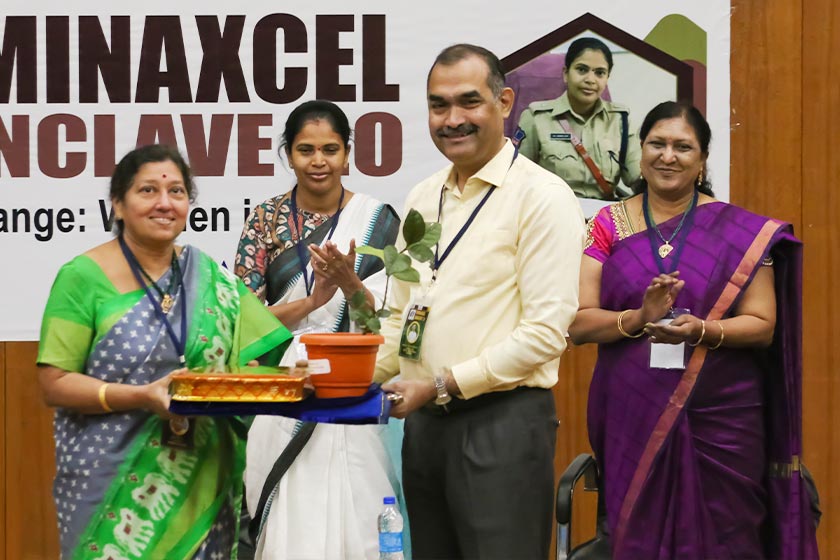
The event was graced by distinguished members of the
IFHE leadership and CWD:
- Dr. T. Koti Reddy, Vice Chancellor In-charge, IFHE
- Dr. S. Vijayalakshmi, Convenor, Centre for Women
Development and Registrar, IFHE
- Dr. S. Venugopal, Director, IBS Hyderabad
- Prof. Sanjay Fuloria, Director, CDOE
- Prof. Kala Chenji, Coordinator, CWD
The presence of the senior leadership of IFHE reflected the University's
continued support for initiatives focused on women's
empowerment, leadership development, entrepreneurship and inclusive
institutional growth.
The event was supported by Club Aaina and Club Nazaria,
whose involvement contributed to the effective coordination and
execution of the programme.
Proceedings of the Conclave
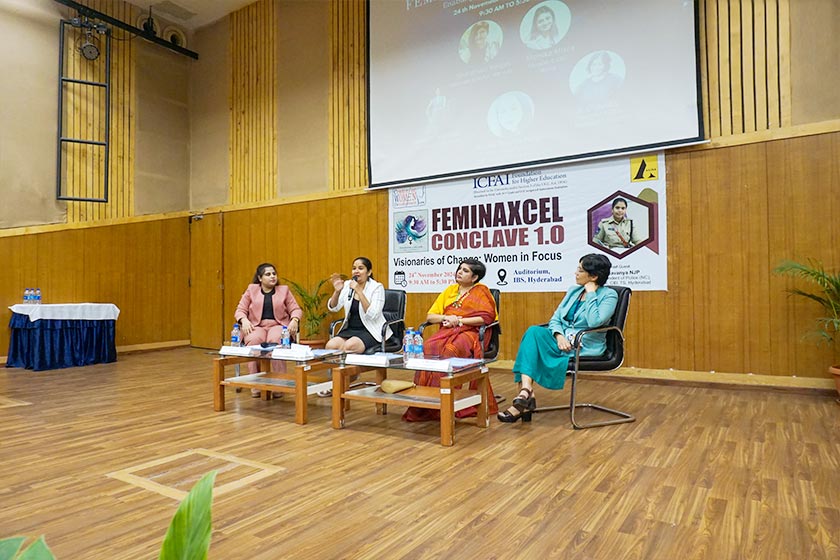
Session I: Panel Discussion - Empowering Women
for a Sustainable Future: The Role of MNCs
Time: 9:40 AM - 10:40 AM
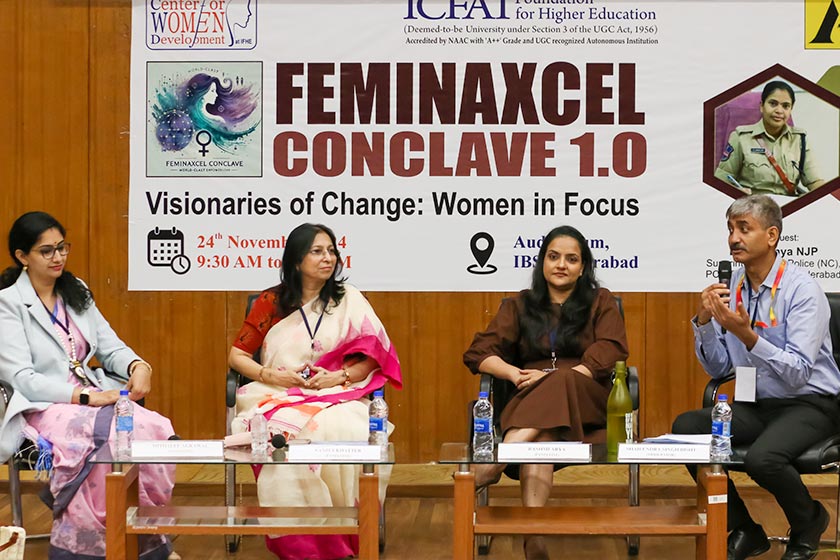
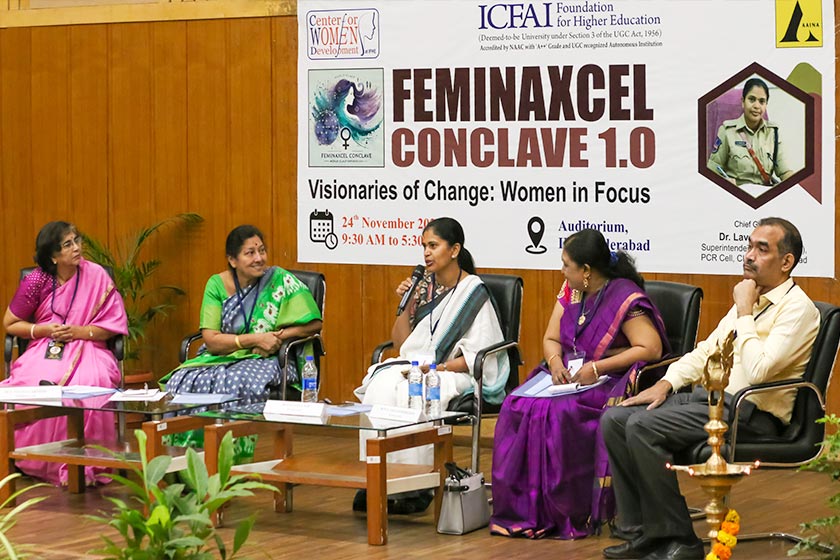
The conclave commenced with an engaging panel discussion on
“Empowering Women for a Sustainable Future: The Role of
MNCs.”
The panel brought together professionals with significant experience in
corporate management, operations and human resources:
- Ms. Kajal Baraik, Deputy Manager, PepsiCo
- Mr. Madhu Murthy, Co-founder & Head of Operations - India, Qualizeal
- Ms. Rekha Narendra, VP & HR Head, RealPage
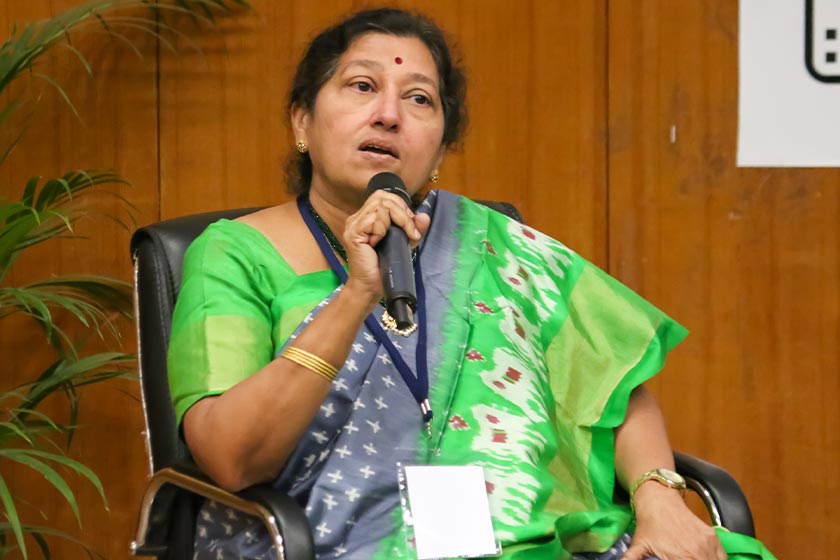
The session was moderated by Dr. S. Vijayalakshmi, Registrar,
IFHE.
Key Areas of Discussion
The discussion examined the role of multinational corporations in
creating workplaces where women can participate and progress on an equal
footing. The panelists highlighted the importance of moving beyond
conventional approaches to diversity and developing organizational
cultures that genuinely support inclusion.
The discussion focused on:
- Creating equal opportunities for women at different stages of their
careers.
- Developing inclusive workplace policies and practices.
- Encouraging women to take up leadership responsibilities.
- Providing mentorship and professional development opportunities.
- Creating supportive work environments that enable women to balance
professional and personal responsibilities.
- Promoting diversity as a contributor to organizational performance
and innovation.
- Building sustainable organizational cultures that value different
perspectives.
- Encouraging women to aspire for senior leadership and
decision-making positions.
The interaction provided students with an understanding of how gender
inclusion is increasingly becoming an important component of responsible
and sustainable corporate practices.
The panel also reinforced the message that women's empowerment requires
not only individual determination but also institutional support,
organizational commitment and inclusive leadership.
Guest Lecture I - Inclusive Innovation: How MNCs Are Supporting Women Founders
Time: 10:55 AM - 12:10 PM
The second session featured an insightful guest lecture by Ms. Madhurima Agarwal, Managing Director,
Microsoft Startups India, on the topic:
“Inclusive Innovation: How MNCs Are Supporting Women Founders”
The session focused on the growing role of the corporate sector in creating entrepreneurial ecosystems that
enable women to establish and scale their ventures.
Ms. Agarwal highlighted the importance of innovation, technology, access to resources, mentorship and
networks in enabling women entrepreneurs to transform ideas into sustainable businesses.
Key Takeaways
The session emphasized that women founders require more than financial support. They also need:
- Access to technology and innovation platforms.
- Mentorship from experienced professionals.
- Opportunities to connect with investors and industry leaders.
- Entrepreneurial networks and communities.
- Market access.
- Capacity-building opportunities.
- Confidence and institutional encouragement.
The session also highlighted the role that multinational organizations can play in building a more inclusive
entrepreneurial ecosystem.
For the students, the lecture provided an opportunity to understand how the startup ecosystem is evolving and how
technology and corporate support can help entrepreneurs overcome some of the traditional barriers associated
with starting and scaling a business.
Guest Lecture II - Building a Startup from Scratch: My Journey as a Woman Founder
Time: 2:00 PM - 2:45 PM
Following the lunch break, the conclave continued with an inspiring guest
lecture by Ms. Midhula Devabhaktuni, Co-founder, MIVI.
The topic of the session was:
“Building a Startup from Scratch - My Journey as a Woman
Founder”
The session provided a first-hand account of the entrepreneurial journey
and the realities associated with building a business from the ground
up.
Ms. Devabhaktuni spoke about the challenges, uncertainties and learning
experiences associated with entrepreneurship. Her journey demonstrated
that successful entrepreneurship requires a combination of
vision, perseverance, adaptability, resilience and continuous
learning.
Major Themes
The interaction covered several important aspects of entrepreneurship,
including:
- Converting an idea into a viable business.
- Understanding customer needs.
- Building and strengthening a brand.
- Managing uncertainty and business challenges.
- Learning from setbacks and failures.
- Maintaining perseverance during difficult phases.
- Developing a strong entrepreneurial mindset.
- Building teams and managing people.
- Remaining focused on long-term objectives.
The personal nature of the session made it particularly relevant to
students, as it provided an authentic perspective on the entrepreneurial
journey rather than presenting entrepreneurship only from a theoretical
standpoint.
The session served as an important reminder that successful businesses
are often built through persistence, experimentation, learning
and the courage to continue despite challenges.
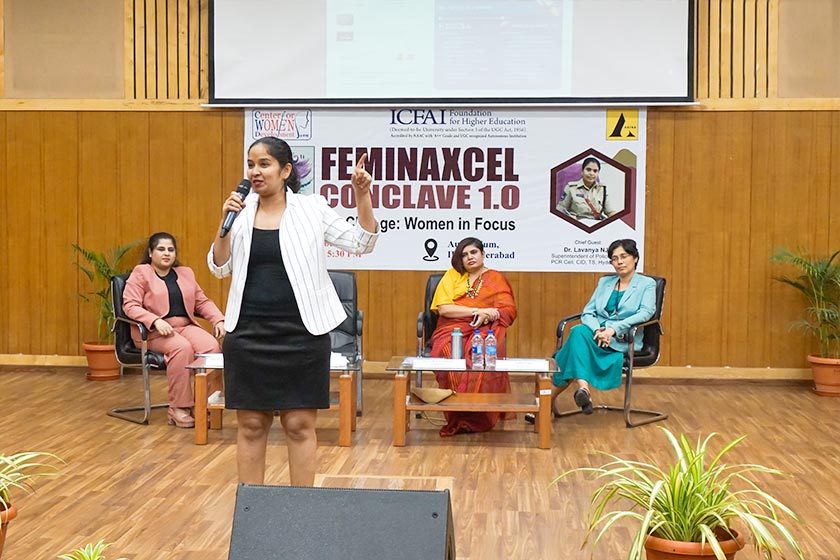
Panel Discussion II - The Hustle and the Hurdles: Overcoming Challenges as a Woman Entrepreneur
Time: 3:00 PM - 3:45 PM
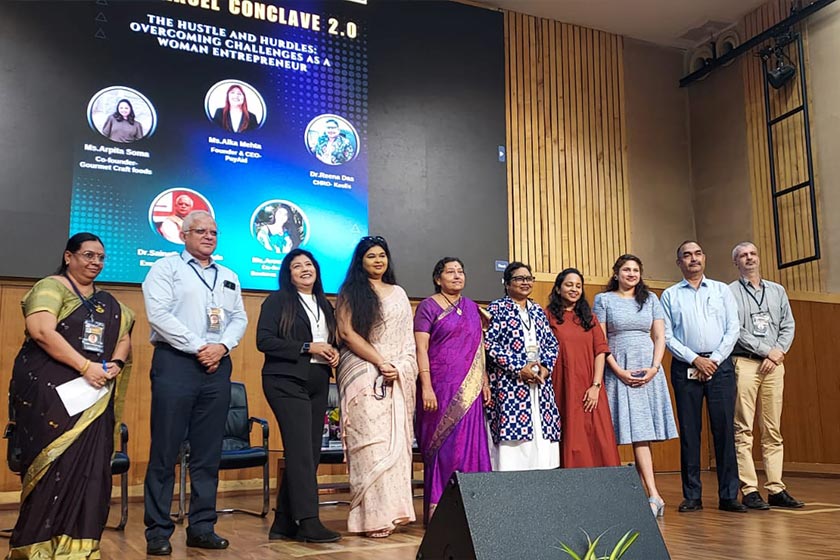
The final substantive session of the conclave was a panel discussion on:
“The Hustle and the Hurdles: Overcoming Challenges as a Woman
Entrepreneur”
The panel comprised:
- Ms. Alka Mehta, Founder & CEO, PayAid
- Ms. Reena Das, CHRO, Keolis
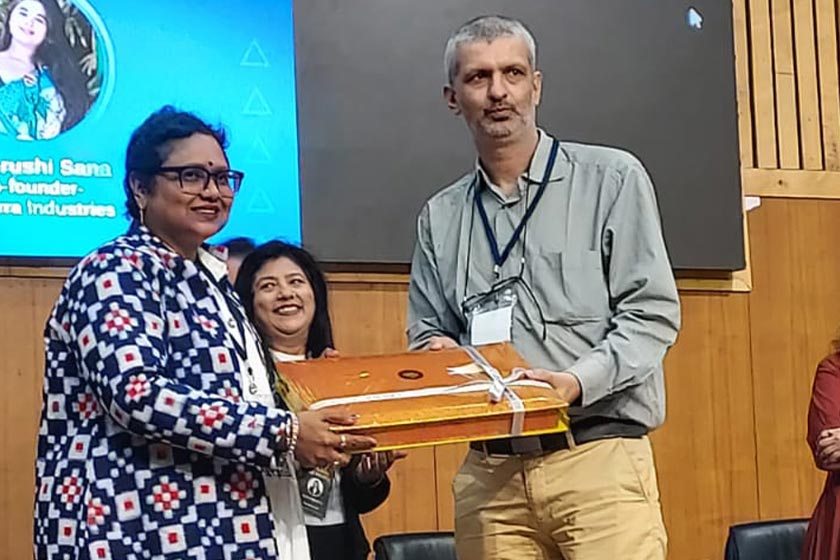
- Ms. Arushi Sana, Co-founder, Santerra Industries
- Ms. Arpita Soma, Co-founder, Gourmet Craftfoods
The discussion was moderated by Dr. Sainath Manikonda, Executive
Director, ICFAI Incubator.
The session provided an opportunity to understand entrepreneurship from
multiple perspectives, including business creation, organizational
leadership, human resources, innovation and managing entrepreneurial
challenges.
Challenges Discussed
The panelists shared candid experiences relating to:
- Establishing credibility in competitive business environments.
- Overcoming gender-based perceptions and stereotypes.
- Managing professional and personal responsibilities.
- Building teams and managing organizational growth.
- Dealing with uncertainty and setbacks.
- Accessing networks and business opportunities.
- Taking calculated risks.
- Maintaining confidence and resilience.
- Learning from failures and adapting to changing circumstances.
- Creating sustainable businesses rather than focusing only on
short-term success.
The panelists emphasized that entrepreneurship is not a linear journey.
It involves experimentation, setbacks, adaptation and continuous
learning.
The discussion also highlighted the importance of self-belief,
resilience, mentorship, networking and the willingness to take
calculated risks.
For the students, the session was particularly valuable because it
presented entrepreneurship as a journey involving both opportunities and
challenges.
Interaction with Students
An important feature of Feminaxcel Conclave 2.0 was the opportunity for
students to interact directly with experienced professionals and
entrepreneurs.
The sessions exposed students to real-world perspectives that
complemented their academic learning. The speakers and panelists
provided insights into areas that are difficult to understand solely
through classroom teaching, including:
- Corporate leadership.
- Entrepreneurship.
- Women in management.
- Innovation.
- Startup development.
- Corporate diversity and inclusion.
- Career progression.
- Professional resilience.
- Networking and mentorship.
The interaction encouraged students to think beyond conventional career
paths and consider leadership and entrepreneurship as opportunities to
create meaningful social and economic impact.
Major Learnings from the Conclave
The deliberations across the four sessions brought out several
significant learnings.
9.1 Inclusion is a Business Imperative
Gender inclusion should not be viewed merely as a social responsibility
initiative. Diverse teams and inclusive workplaces can contribute to
innovation, better decision-making and sustainable organizational
growth.
9.2 Women Need Enabling Ecosystems
Individual talent and determination are important, but women also need
access to mentors, networks, technology, capital, professional
opportunities and supportive institutions.
9.3 Leadership Begins with Confidence
Women aspiring to leadership positions must develop confidence in their
abilities, take ownership of opportunities and be willing to step
outside their comfort zones.
9.4 Entrepreneurship Requires Resilience
The entrepreneurial journey inevitably involves setbacks and uncertainty.
Resilience and the ability to learn from challenges are critical
qualities for long-term success.
9.5 Mentorship and Networking Matter
Access to experienced mentors and professional networks can significantly
influence the growth trajectory of women professionals and
entrepreneurs.
9.6 Technology Can Enable Inclusion
Technology and digital platforms can reduce traditional barriers to
market access, knowledge, networking and entrepreneurship, particularly
for emerging women founders.
9.7 Institutions Have an Important Role
Educational institutions can play a significant role in preparing young
women for leadership by providing exposure, mentoring, industry
interaction, entrepreneurship opportunities and platforms for
expression.
Role of CWD
The successful organization of Feminaxcel Conclave 2.0 reflects the
continuing efforts of the Centre for Women Development (CWD),
IFHE, to create meaningful platforms for dialogue,
awareness and empowerment.
Through such initiatives, CWD seeks to:
- Encourage women to pursue leadership roles.
- Promote entrepreneurship among students.
- Facilitate industry-academia interaction.
- Create awareness about gender inclusion.
- Provide platforms for women leaders to share their experiences.
- Encourage students to engage with contemporary social and
professional issues.
- Build a culture of equality, respect and opportunity.
The conclave is therefore aligned with the broader vision of creating an
environment where women are encouraged to participate, lead,
innovate and contribute to society and the economy.
Institutional Significance
Feminaxcel Conclave 2.0 represents an important component of IFHE's
broader commitment to gender equality, leadership development,
entrepreneurship and inclusive excellence.
For an institution of higher education, such programmes provide an
important bridge between academic learning and real-world experience.
They enable students to interact with leaders who have navigated complex
professional environments and entrepreneurial journeys.
The event also strengthened the connection between industry,
academia and students, creating opportunities for knowledge
sharing and future engagement.
The participation of corporate leaders, entrepreneurs and senior
professionals added significant value to the academic environment and
exposed students to contemporary developments in the workplace and
business ecosystem.
Conclusion
Feminaxcel Conclave 2.0 was a meaningful and impactful
initiative that brought together diverse perspectives on women's
empowerment, leadership, entrepreneurship, innovation and
inclusion.
The four sessions offered a comprehensive perspective—from the role of
multinational corporations in building inclusive workplaces to the
challenges of establishing and scaling entrepreneurial ventures.
The experiences shared by the speakers demonstrated that empowering women
requires a combination of individual confidence, institutional
support, inclusive organizational cultures, access to opportunities,
mentorship, technology and resilient leadership.
The conclave also reinforced the importance of creating an environment in
which young women are encouraged to dream, experiment, lead and create.
The event successfully achieved its objective of inspiring
students, facilitating meaningful industry interaction and
strengthening the dialogue around women's participation in
leadership and entrepreneurship.
The Centre for Women Development, through initiatives such as Feminaxcel,
continues to provide a valuable platform for advancing conversations on
women's empowerment and creating opportunities for the next generation
of women leaders and entrepreneurs.
The successful completion of Feminaxcel Conclave 2.0
stands as a testament to the collective efforts of the leadership of
IFHE, CWD, IBS Hyderabad, the speakers, panelists, faculty members,
coordinators, student volunteers and supporting clubs.
The conclave concluded on a positive and inspiring note, leaving
participants with an important message:
Empowering women is not only about creating opportunities for
women—it is about creating stronger institutions, more inclusive
workplaces, innovative businesses and a more equitable
society.